社会でのアートの在り方に、足掻く。Struggling with what art can be inside society.
日常生活との接点を求めて、葛藤していた時代だった。 少しでも可能性があれば、出来ることは何でも実行に移した。
など、多方面に展開した。
These were years of struggling to find a point of contact with everyday life. If there was even the slightest possibility in something, I put whatever I could into practice.
— it spread out in many directions like this.
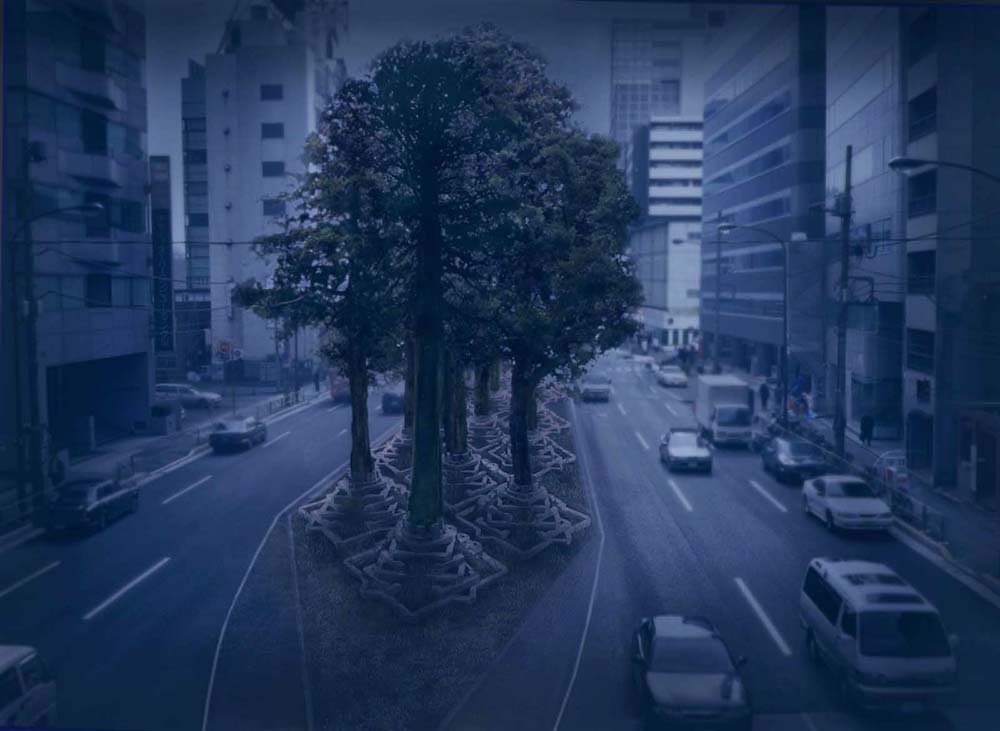
NEC × P3 art and environment × RACEによるメタ東京プロジェクトへの参加。 東京に巨木が生まれるための聖地のような墓があってもいいというアイデアをインターネット空間で発表した。 都市の中では木が排除されるか添え物でしかない現実に対し、アートとしての庭を作りたいという思いから生まれた提案。
Participation in the Meta Tokyo Project by NEC × P3 art and environment × RACE. I presented, in cyberspace, the idea that Tokyo could have a sanctuary-like grave for a giant tree to be born from. This proposal grew out of a desire to create a garden as art, in response to the reality that trees in the city are either excluded or reduced to mere accessories.
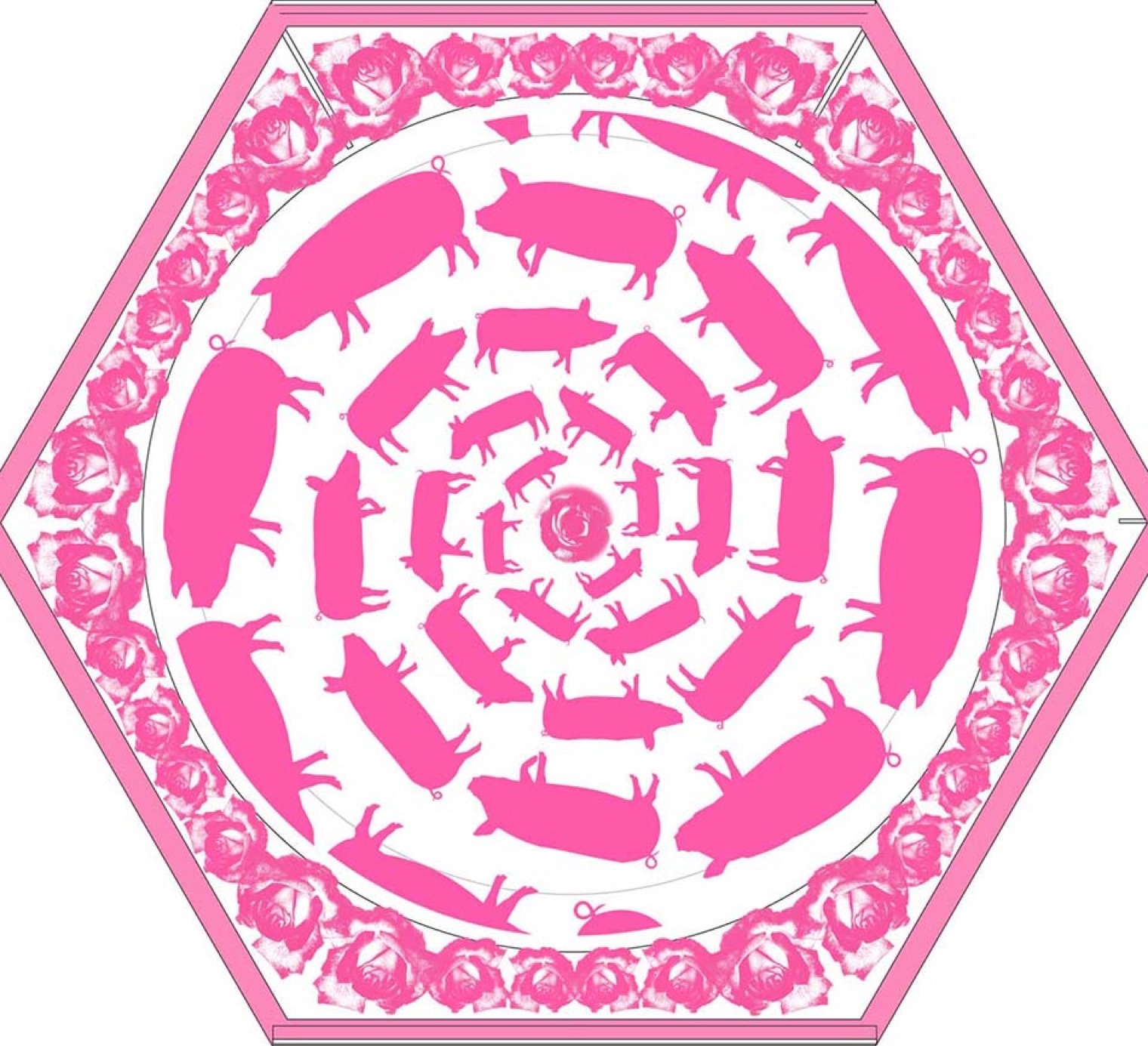
コンポッチのデザインには、豚が中央からだんだんと大きくなって消えていく図像をあしらった。 豚が残飯を食べ、成長した豚を食べるという、アジアの伝統的な生活習慣を元にした。 コンポッチは、フィリップモリス・アートアワードで最終選考まで残った。 しかし、実社会の制度の前に、技術力が未熟だったことは認めざるを得ない。 多くの関係者にご協力を仰いだことについて、申し訳ない気持ちもあり、重ねて関係者には感謝したい。
The design of Compotti carried an image of pigs growing gradually larger from the center outward and then vanishing. It drew on a traditional Asian way of living in which pigs eat the leftovers and the grown pigs are eaten in turn. Compotti made it through to the final selection of the Philip Morris Art Award. Yet set against the institutions of the real world, I have to admit my technical ability was immature. I feel some regret at having asked so many people for their help, and I want to thank all of them once again.
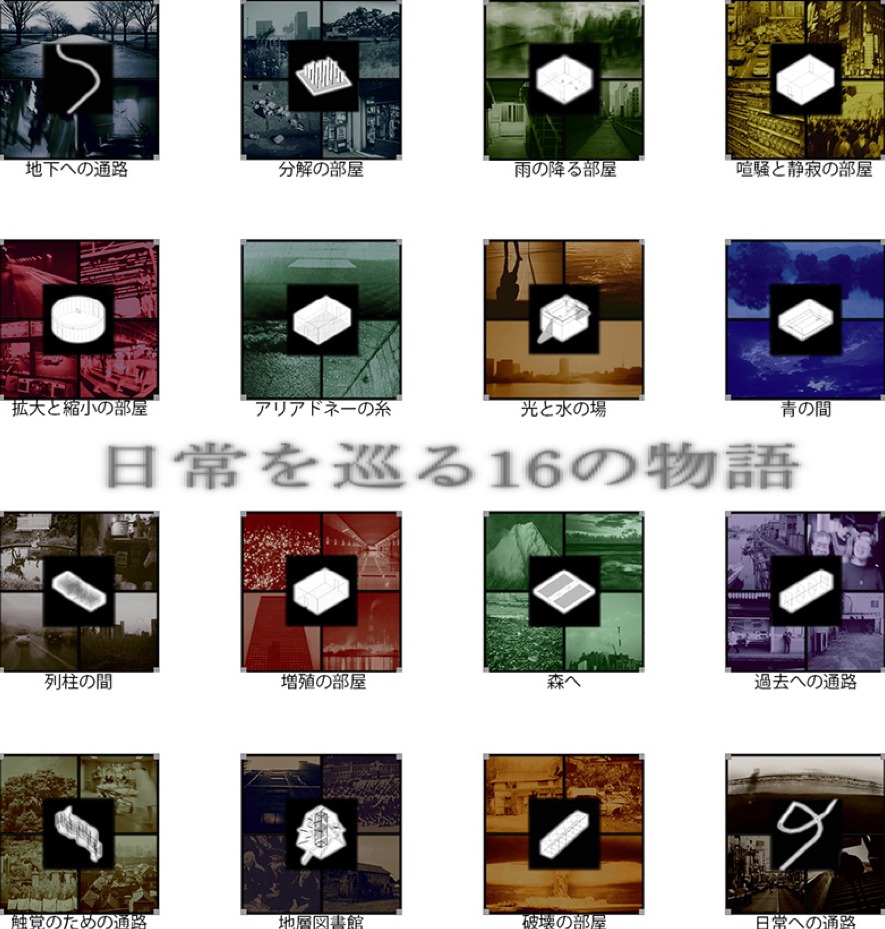
16storysは、自分の感覚を通した、日常と社会の関係を、詩と解説、インスタレーション計画図とその説明とが組み合わさったものを、16枚のパネルにしたもの。 その前身である、博士論文「自らの迷宮」は、同様の仕立てで、日常と社会の関係から生まれた問題点を、自由に設計されたインスタレーションとして設計し、それらを連結させ迷宮のように部屋を辿っていくものである。 16storysは、都市や日常の風景画像も組み合わせ、16枚のパネルに分けることで、自由に組み替えられるように設計し直した。
デ・コンストラクティブへの興味や、想像力を自由に展開して仮想空間を作る、キャドという建築設計ソフトに魅了された。
迷宮とは、内なる世界で、思考が辿る軌跡だった。 人は、外に視点を開いている時に、決して内に視点を向けることはない。 内に視点を向けるには、一人、光を閉ざしてそこに広がる世界を見ていくことになる。 だが内側の世界は、外側の世界から隔絶している世界ではない。 ここでは、外側の世界を映し、抽象化し組み換え整理することが容易である。
内向性、外向性という単純な精神分析的区分けや、ゲームの世界で後に実現したヴァーチュアルな世界は、これには該当しない。 現代性を切り取る内容に関しては、今も変わらない問題を読み取ることが出来るし、60年代から続けられた近代批判の内容とも重なる。 内側の世界は、外側の世界の鏡となりうる。
16storys took the relationship between daily life and society, passed through my own senses, and combined poems and commentary with installation plans and their explanations, laid out across sixteen panels. Its predecessor, my doctoral thesis "My Own Labyrinth," was put together in the same way: problems arising from the relationship between daily life and society were designed as freely conceived installations, then linked together so that one traced through the rooms as through a labyrinth. For 16storys I added images of the city and of everyday scenery and divided the whole into sixteen panels, redesigning it so that it could be freely rearranged.
I was drawn to the deconstructive, and captivated by CAD, the architectural design software that lets the imagination unfold freely and build a virtual space.
The labyrinth was an inner world, the track that thought traces. While one has one's viewpoint open toward the outside, one never turns it inward. To turn it inward is to be alone, to shut out the light and look at the world that spreads there. But the inner world is not a world cut off from the outer one. Here it is easy to mirror the outer world, to abstract it, recombine it, put it in order.
Neither the simple psychoanalytic division into introversion and extroversion, nor the virtual worlds later realized in games, corresponds to this. As for what it captures of its own time, one can still read in it problems that have not changed, and it overlaps with the critique of modernity carried on since the sixties. The inner world can become a mirror of the outer.
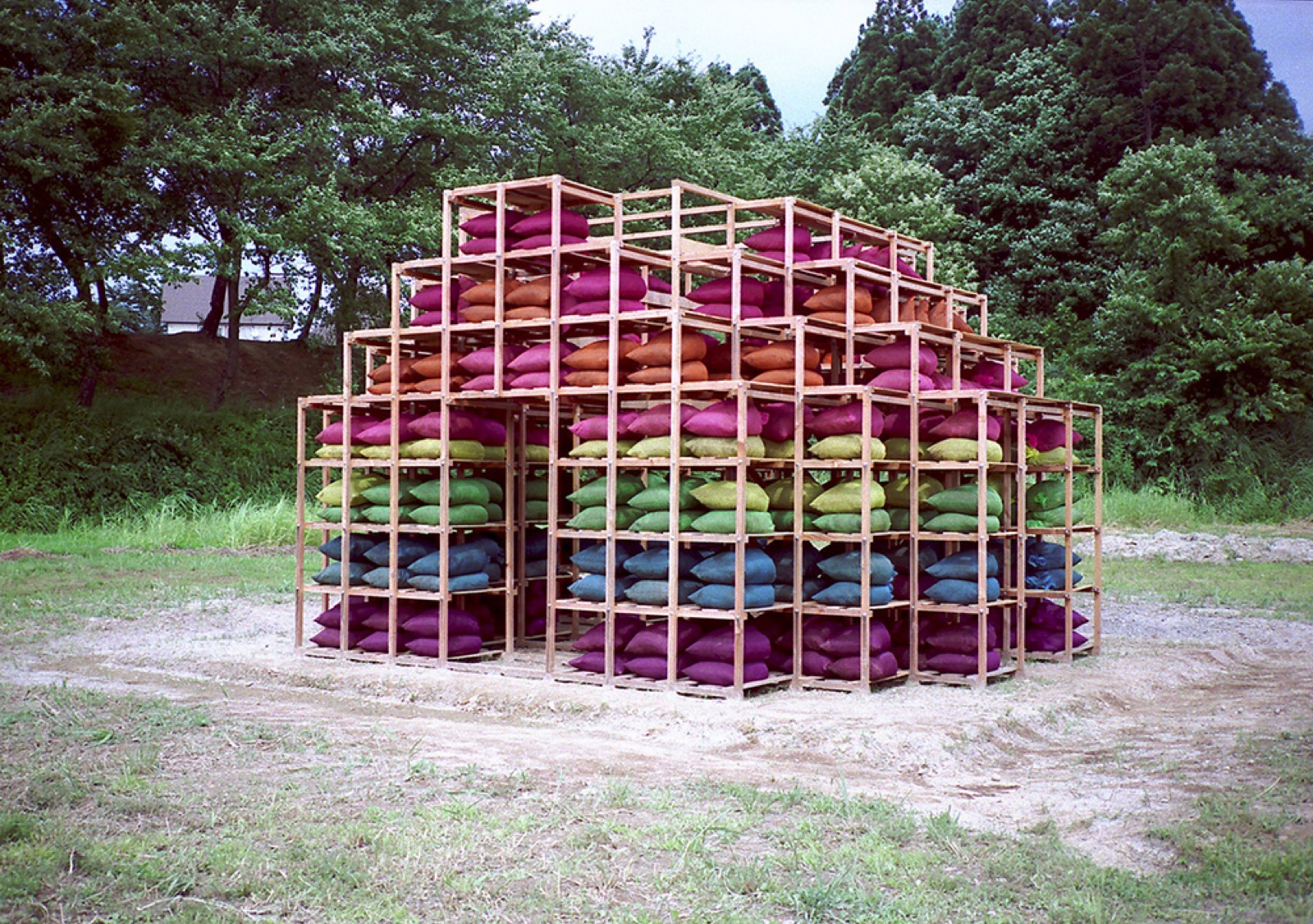
コンポスト・ハウスは、多くの試行錯誤の元スタートした、大地の芸術祭第一回目の作品。 旅人の迷路プランが採用になったのだが、候補地の地面は硬く踏みしめられていて、つるはしが折れた。 作品の代替案を急遽探し、農協のキーパーソンとの出会いから、とんとん拍子に計画が定まった。 ここでの成功は、農協の技術と、農業生産を共に行う多くの協力者が得られたことである。
もみ殻堆肥の講習を行い、堆肥を熟成させるための建築を制作した。 熟成した堆肥、建材すべてを参加者に還元し、廃棄物が少しも出なかったことは印象として強く残っている。
Compost House, which began out of a great deal of trial and error, was my work for the first Echigo-Tsumari Art Triennale. The plan for Traveler's Maze had been accepted, but the ground of the candidate site was trodden so hard that a pickaxe snapped. Casting about urgently for an alternative, I met a key figure at the farmers' cooperative, and from there the plan fell into place in no time. What made it work here was the cooperative's expertise, and the many collaborators who took up agricultural production alongside me.
We held a course on rice-husk compost and built an architecture in which the compost could mature. The matured compost and every piece of the building material were returned to the participants, and the fact that not the slightest waste came out of it has stayed with me strongly.
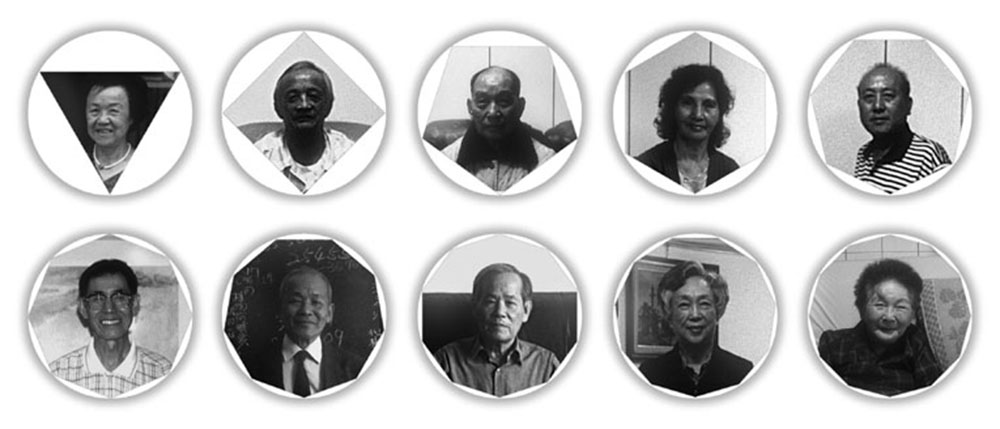
2000年2月よりおよそ1年間台湾に滞在して、この[Pleasant Days]というプロジェクトを行った。 ポーラ若手芸術家海外留学奨学金を得て、海外在住制作の地として台湾を選んだ。 日本と深い関係を持つアジアの隣人・台湾で、自身や日本について捉え直す機会になると考えた。 その直後、921大地震が起き、それまでのプランを取りやめ、被災地でアーティストとしてできることはないかと考えた。
まず台北で陶器の壷を制作した。 それは底が三角形、次は四角形、五角、六角…そして円までが縦につながったフォルムの壷となった。 国家や民族、世代、さまざまな異なるものが繋がることのメタファーとして制作されたこの壷は、インタビューをしたお年寄一人一人に贈られた。 中華民國視覚芸術協会が企画した『心靈重建、藝術重建』というプログラムに神戸のAct Kobe Japan*のメンバーとともに参加し、台中の様々な方々の協力を得て、最終的に10名のお年寄にインタビューすることができた。 邵(シャオ)族2名、泰雅(タイヤル)族3名を含む66歳から85歳までの方々と、日本語で対話し、映像作品としてまとめた。
展覧会では、対話を編集した映像をプロジェクションするとともに、台湾の昔と現在の風景や地震の風景を、スライドで投影するインスタレーションとして発表した。 また、10名の方々の肖像写真をもとにした平面作品、白い壷も展示された。
A Japanese young artist, Isao Toshimori, worked on Pleasant Days project in Taiwan for one year, beginning in February 2000. He chose Taiwan for his first foreign residence because Taiwan has had a historically close relationship with Japan and he thought that this experience would give him an opportunity to review his perceptions of himself and Japan. Then, a powerful earthquake hit Taichung area on September 21, 1999. Toshimori entirely gave up on his previous plan, as he questioned himself on what he could do as an artist in the devastated area. He started to work on this new project, later entitled Pleasant Days.
Toshimori decided to interview elderly people who had experienced the earthquake in Taichung. Prior to the interview, he created ceramic pots in Taipei. The bottom of the first pot was triangular, which connected to a square-bottomed one, to a pentagon, to a hexagon, all the way up to a round one. This beautiful vertical form in white became a metaphor of linking people beyond their differences of nationalities, races, generations, and others. He gave a white pot to each elderly person as a gift.
Through attending a program, Revived Spirit, Reconstructed Art, organized by Association of the Visual Arts in Taiwan, with other Act Kobe Japan* artists, Toshimori met some Taiya people. This and other people helped him to interview ten elderly people in Taichung. He had dialogues in Japanese with the people, from sixty-six to eighty-five years old, including two Xiao and three Taiya people.
At the exhibitions, a video installation of the interviews, combined with slide projections of old and present Taiwan landscapes and the damage of the earthquake is being shown. The two-dimensional works based on the ten elderly people in photographic images and the white pots are also exhibited.
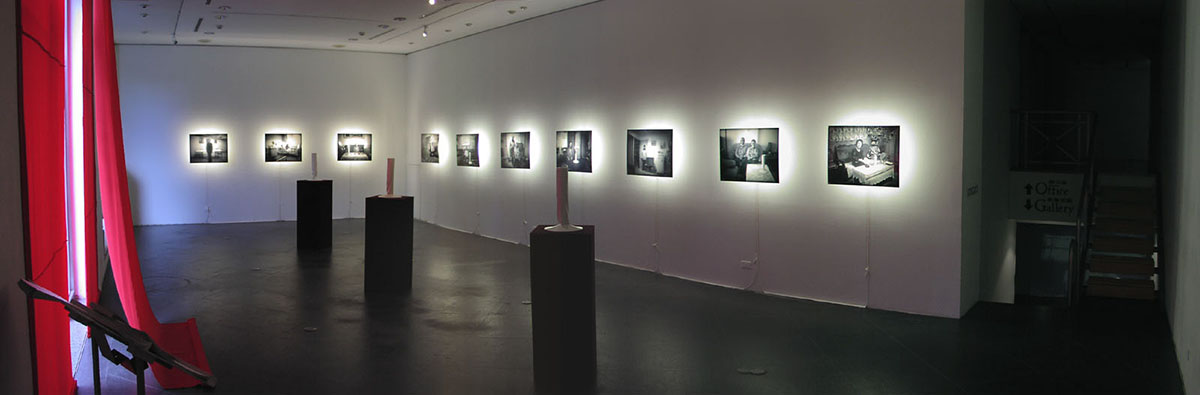
2000年2月からポーラ若手芸術家海外留学奨学金を得て、1年間台湾に滞在して行ったプロジェクト。 同時に、921大地震の被災地で、Act Kobe Japanのメンバーと共に震災復興ワークショップを行う。
台北で、三角形から円までが連結した、「つながる」意味が込められた磁器の壷を制作。 台中の方々の協力を得て、邵(シャオ)族2名、泰雅(タイヤル)族3名を含む66歳から85歳までの10名の方々と、日本語でインタビューを行う。 壺は一人一人に寄贈され、対話の内容を映像作品としてまとめ発表した。
A project carried out over a year's stay in Taiwan from February 2000, on a POLA overseas scholarship for young artists. At the same time, in the area struck by the 921 earthquake, I ran earthquake-recovery workshops together with members of Act Kobe Japan.
In Taipei I made porcelain vessels in which a triangle through to a circle were joined one above the other, carrying the meaning of "connecting." With the help of people in Taichung, I conducted interviews in Japanese with ten people between the ages of 66 and 85, among them two of the Thao and three of the Atayal. A vessel was given to each of them, and the content of the dialogues was brought together and presented as a video work.
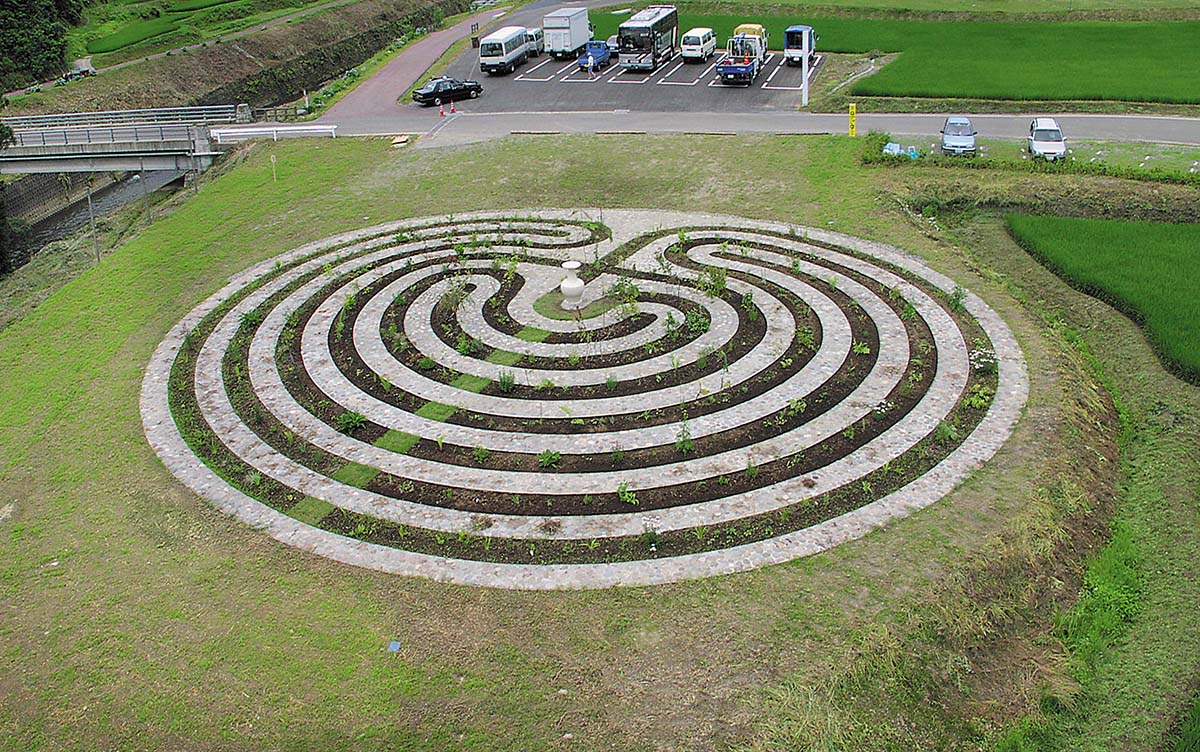
海辺で航海の安全を祈願し、生命を生み出す場所や、母なる大地の象徴とされた、古代に全世界で発見されている迷路の形状は、この妻有地域で発見された、国宝火炎土器の形状とも相似している。 縄文時代にあった豊かな暮らしや大地の芸術祭に、意味と祈りを重ねた作品。
食用となる自然の植物を集める植栽ワークショップを連続して行い、植物の育成や管理に、自ら携わる。 2000年から計画、地域の公園として実現。
この迷路に関わった時間は長い。 2000年から2003年を経て用地が決まり、2003年から2011年まで植栽に関わった。 雪深い土地のため、積雪量を超える丈にまで木が成長することを見守る必要があった。 また土地に根差す作品となるための、地域の人々と積極的に関わっていった。
この迷路は、古代において全世界で発見されている。 ケルトでは、船出する前に、海辺で航海の安全を祈願するために使われた。 古代エトルリアでは、子宮に例えられ、生命を生み出す場所とされた。 ホピ-インディアンは「母なる大地」の象徴と呼ぶ。 また妻有地方という、この地域では国宝の火炎土器が出土し、縄文時代に豊かな暮らしがあったとされている。
私は、この迷路の形状が、縄文時代の模様と共通していると直感した。 当時の、自然とのバランスにおいて成り立っていた生活も、地域を超えて共通する。 今や我々は、自然に対して収奪することしか出来ていないように感じている。 そのような理由で、旅人の迷路は「大地の芸術祭」というテーマにふさわしい、意味と祈りが重なると感じたのだ。
中央の水瓶に掘られたメッセージ(原文は左側)
迷路と言っても、この迷路は迷わない一本道で出来ていて、航海の安全を祈る儀式として定められ、太陽系の惑星を巡り歩く場所だったとされている。 人類の歴史に、戦争や大事故という不幸が含まれているように、道を間違えないで歩きたいと思っていても、踏み外してしまうのが、私たち人間の性かも知れない。 それでも、宇宙とのつながりに思いを馳せたい。
この土地は、農舞台建設残土を駐車場用地のために、田を埋め立てた人工地盤である。 森を新たに作り出し、自然に恵まれた土地に、また自然を造り出すという理念は、いわゆるアートの文脈から理解することは困難なテーマかも知れない。 それでも大いなる自然は、作者の手を離れて現れ、自然(じねん)の姿をありのままに表した。 益々、観念的になって遠ざかっていく自然を引き付け、アートと自然の大きな円環を感じさせられたことは、作者の意図をも超える。 この作品は生涯、私の軛となり続ける。
The maze form — found all over the ancient world, used by the sea to pray for safe voyages, taken as a place that brings forth life and as a symbol of the mother earth — also resembles the shape of the flame-style pottery, a National Treasure, unearthed here in the Tsumari region. A work in which meaning and prayer are laid over the abundant life of the Jomon period and over the Echigo-Tsumari Art Triennale.
Planting workshops gathering edible wild plants were held one after another, and I took part myself in growing and caring for them. Planned from 2000, realized as a park for the district.
I have been involved with this maze for a long time. The site was settled between 2000 and 2003, and from 2003 to 2011 I was involved in the planting. Because the land lies under deep snow, the trees had to be watched over until they grew taller than the snowfall. And to make it a work rooted in the land, I engaged actively with the people of the district.
This maze has been found throughout the ancient world. Among the Celts it was used by the sea before setting sail, to pray for a safe voyage. In ancient Etruria it was likened to the womb and taken as the place that brings forth life. The Hopi call it a symbol of "mother earth." And in this Tsumari region, flame-style pottery designated a National Treasure has been excavated, and the Jomon period is thought to have been a time of abundant living.
I had the intuition that the shape of this maze had something in common with Jomon patterns. The life of that time, which held together in balance with nature, is also something shared across regions. Today I feel we can do little with nature but plunder it. For those reasons I felt that Traveler's Maze suited the theme of the "Echigo-Tsumari Art Triennale," that meaning and prayer came together in it.
The message carved into the water basin at the center (the original text comes first)
Though it is called a maze, this one is made of a single path on which you cannot lose your way; it was established as a rite for praying for safe voyages, and is said to have been a place for walking the round of the planets of the solar system. Just as human history holds within it the misfortunes of war and of great accidents, it may be in our nature that we lose our footing however much we mean to walk without missing the road. Even so, I want to let my thoughts run to our connection with the cosmos.
This land is artificial ground, rice fields filled in with the earth left over from building Nohbutai to make a parking lot. To create a forest anew, to bring forth nature once more on land already blessed with nature — the idea may be a difficult theme to grasp from within the so-called context of art. Even so, great nature appeared out of the maker's hands and showed the figure of jinen, nature as it is, just as it was. That it drew back a nature growing ever more conceptual and ever further away, and let me feel the great circle joining art and nature, goes beyond even the maker's intention. This work will remain a yoke on me for the rest of my life.
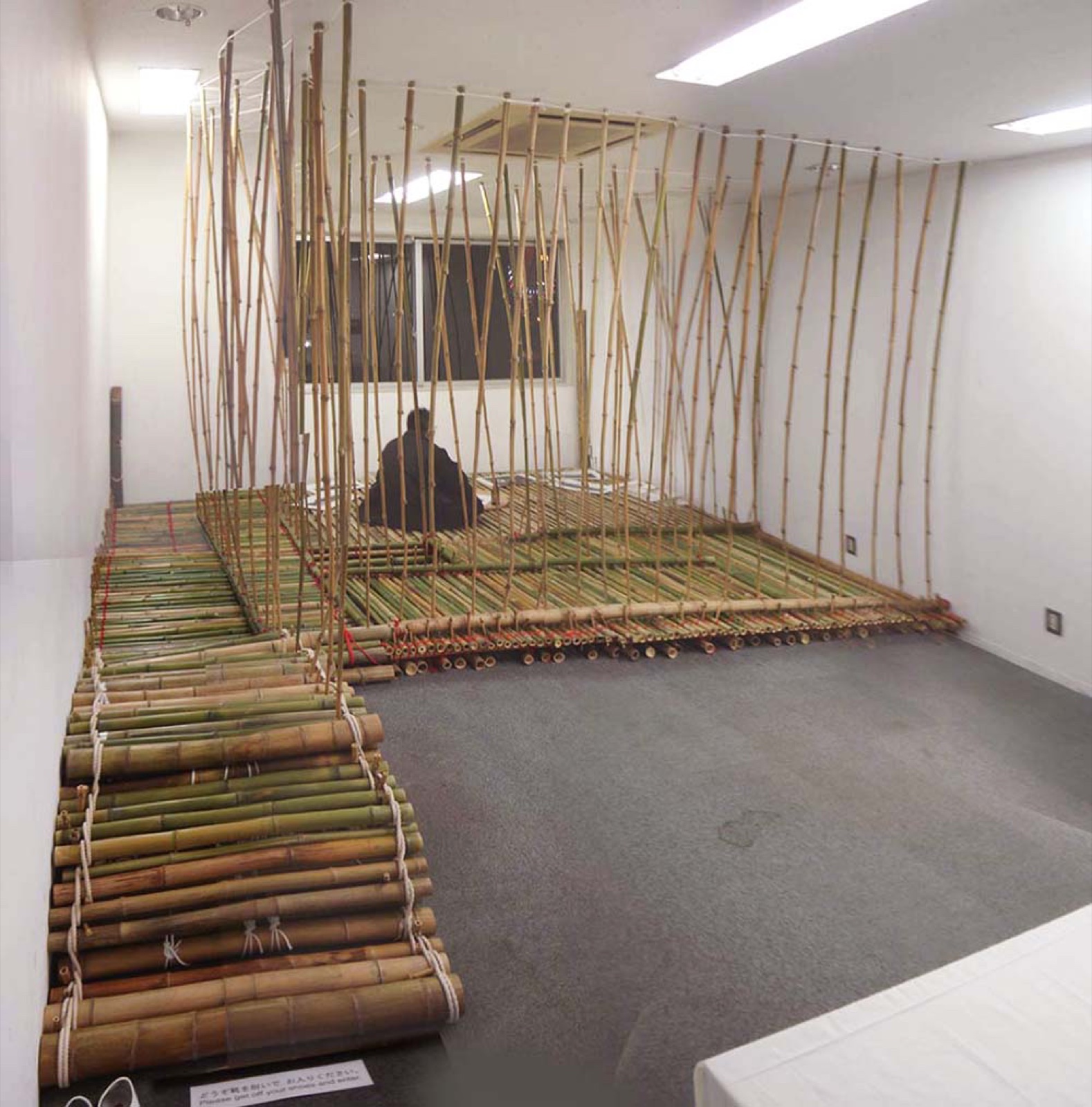
横浜・Bankart Studio NYKでの個展。 竹で室内を仕切り、曲がりくねった通路の先で、対話・共同制作・野点を行った。 「理想の庭を巡る対話」をテーマに、自然との触れ合いや葛藤を話し合った。 後半は竹を再利用して箸やお猪口を作るワークショップを行い、展示の素材そのものをリサイクルした。
A solo exhibition at Bankart Studio NYK in Yokohama. Bamboo partitioned the interior, and at the end of a winding passage, dialogue, collaborative making, and open-air tea ceremony took place. Under the theme "dialogue on the ideal garden," participants discussed their contact with and conflicts with nature. In the latter half, a workshop reused the bamboo to make chopsticks and sake cups, recycling the exhibition's own materials.
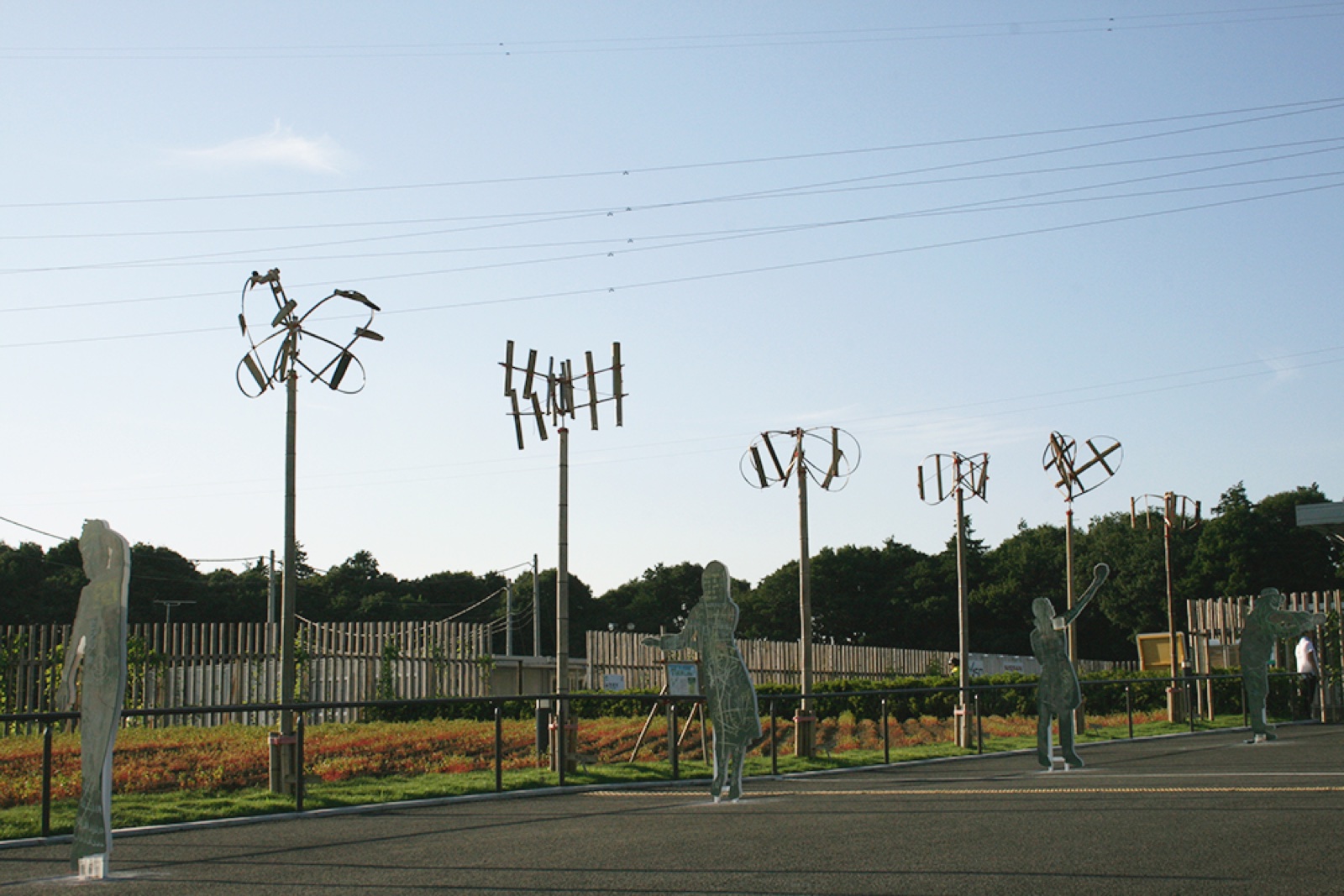
Y150(横浜開港150周年記念事業)「つながりの森」での市民創発プロジェクト。 竹を使った様々な形の風車を考案し公開制作。 出来上がった風車は入り口ゲート近く、メイン会場へ続くスロープ両脇に16基設置された。
A citizen-initiated project at "Forest of Connection," part of Y150, the commemorative project for the 150th anniversary of the opening of the Port of Yokohama. I devised windmills of various forms using bamboo and made them in public. The completed windmills — sixteen in total — were installed along both sides of the ramp leading to the main venue, near the entrance gate.
岡山へTo Okayama