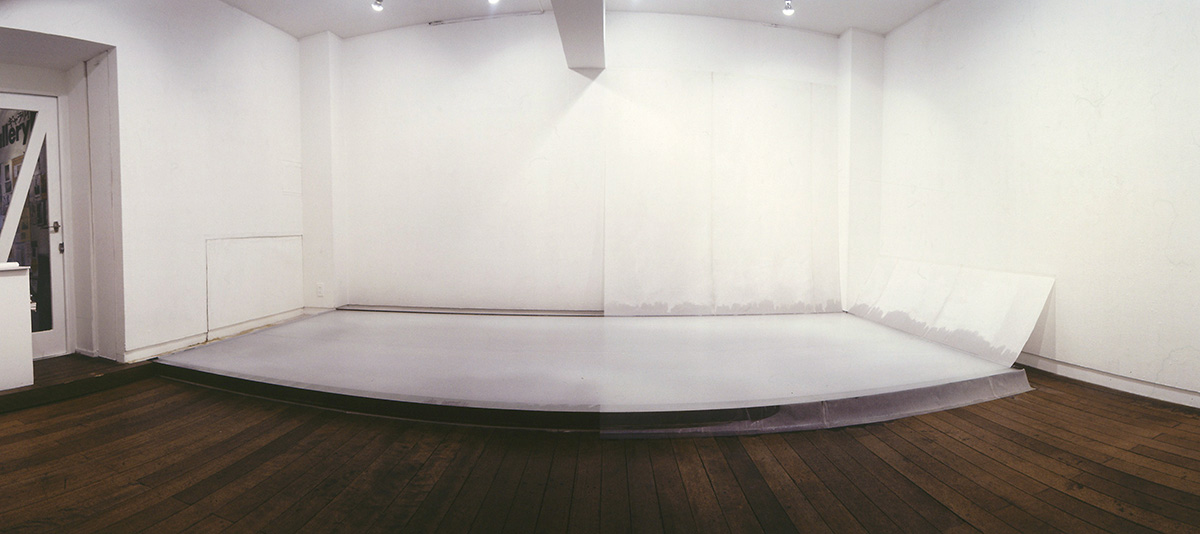
ものと自然を、肉体に降ろす。Bringing matter and nature down into the body.
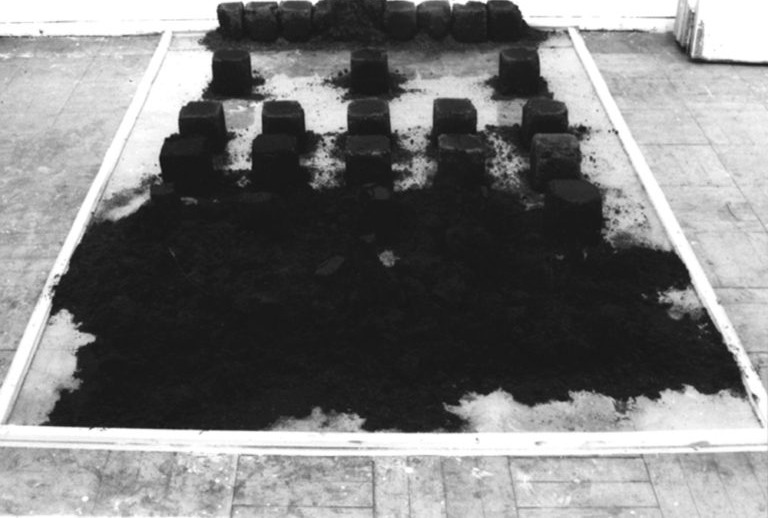
絵画、彫刻、オブジェクトは、どうしても一つの完結した世界を求めることになる。
絵画でいえば、額内の世界。 それは、違う世界へ空いた窓でもあるのだが、同時に閉ざされた世界とも言える。
私は、現実が大きく広く、自分の求める世界が小さく乏しく感じられた。 違う世界を、作品の中に持ち込みたかった。 だから、閉ざされた世界から、一気に外へと視点を展開した。
要は、リアリティーが必要だったからである。 リアリティーとは、額などで限定された制度の中で成立することではなく、私を取り巻く世界から捉えられるもの。 作品とは、リアリティーを踏まえ、更に意味においても超えることが希求された。 情念表現から、外へ現実へと向かうことは必然の展開である。
それに拍車をかけたのは、もの派の作家として有名な榎倉康二氏との出会いだった。 彼の眼差しは、物質そのものを突き抜けて、当時の私よりはるか遠くを見ていた。 本質とは何か?という彼の問いに対して、私は意識を転じざるを得なかった。
またしても、郷里岡山の海の近くで一夏、実験のために過ごした。 この時は身の回りのものを積んだり、焼いたり、自分と物質との関わりにどのような可能性があるのか探り、出来ることを矢継ぎ早に展開していった。 周りに住んでいた知り合いは、受験時代は立派な絵を描いていたのに、この人はどうしちゃったのだろうと不思議がっていた。
自分の気質にあった素材は選べたか?といえば、そこまでには至らなかった。 結局のところ、素材でもなく、観念でもない。 さらに言えば、解釈も咀嚼もない。 作り手とものとの関係は、感応し出会うだけ。 体当たりで試みていくしかなかった。 答えが出るのはかなり後になる。
Painting, sculpture, objects — they inevitably come to seek a single, self-contained world.
In painting, that is the world inside the frame. It is a window opened onto a different world, and yet at the same time it is a closed world.
To me, reality felt large and wide, while the world I was seeking felt small and meagre. I wanted to bring a different world into the work. So I expanded my point of view all at once, out of that closed world and toward the outside.
In short, it was because I needed reality. Reality is not something that holds within a system bounded by a frame; it is something grasped from the world that surrounds me. A work was asked to stand on that reality and then to go beyond it in meaning as well. To move from the expression of raw emotion outward, toward reality, was an inevitable development.
What spurred this on was my encounter with Kōji Enokura, well known as an artist of Mono-ha. His gaze passed straight through matter itself and looked far further than I could at the time. Faced with his question — what is essence? — I had no choice but to turn my awareness.
Once again I spent a summer near the sea in my home region of Okayama, there to experiment. This time I stacked things from around me, burned them, searched out what possibilities lay in my relationship with matter, and unfolded whatever I could in rapid succession. Acquaintances living nearby wondered what had become of me — he used to paint such fine pictures in his exam years.
Had I managed to choose materials suited to my temperament? I had not come that far. In the end it is neither material nor concept. Further, there is neither interpretation nor digestion. The relation between maker and thing is only to respond and to meet. I could only try with my whole body. The answer would come much later.
ものは、作者の意思を反映する。
つまり、作者とものとの関係は、作者の立ち位置や意思を、行為として投げかけることから始まる。 もの派の作品を見て多くの人が、石だけ、紙だけ、木だけという反応をするが、それは背後にある作者の意思を汲み取らない、あるいは汲み取れないからである。
数々の実験を通して、ものとの関わりを咀嚼し、自分の意思を少し確認することが出来た。 そこから出てきたものは、ものを隠すという特質だった。
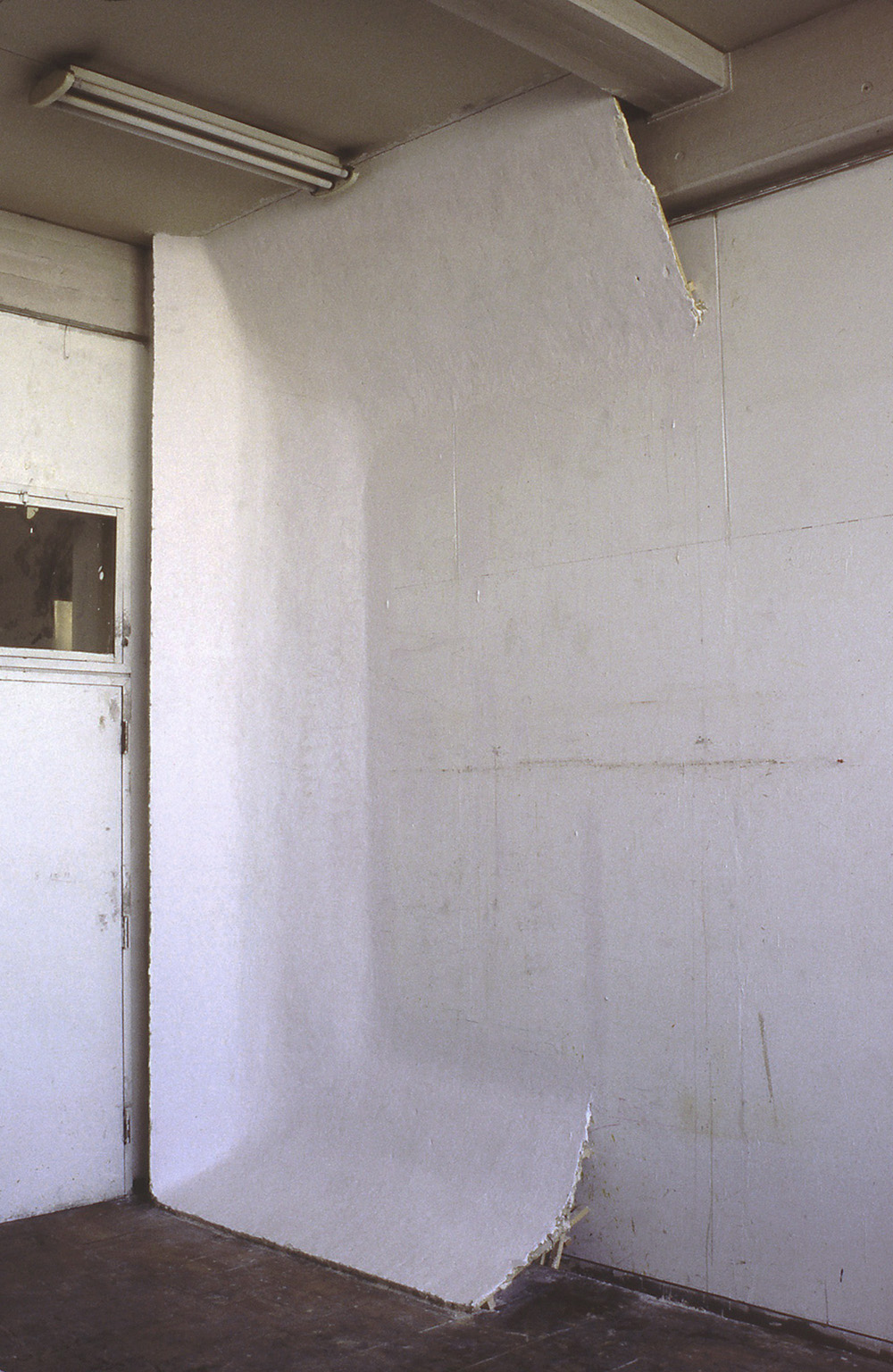
「隠壁」「穏質」というタイトルにあるように、前提となる物質の存在をあからさまにしない、そして壁は壁らしくない、窓は窓らしくない、水は水らしくない、曖昧でどちらともつかない中間領域に引き込み、気が付いた時には対立を孕むという、ものの在り方を図る。
時代性や、学生という、根無し草的に浮遊する社会的境遇も影響したかもしれない。 存在は厳然としてあるものではなく、捉えどころ無く揺れ動くものという感覚があった。
A thing reflects the will of its maker.
That is, the relation between maker and thing begins with throwing one’s own standpoint and will out into the world as an act. Looking at Mono-ha works, many people react by saying: it is only stone, only paper, only wood. That is because they do not read — or cannot read — the maker’s will behind the thing.
Through many experiments I was able to digest my involvement with things and to confirm a little of my own will. What emerged from it was a quality of hiding the thing.
As the titles “Hidden Wall” and “Hidden Texture” suggest, the presence of the matter that underlies the work is not made plain: a wall is not wall-like, a window is not window-like, water is not water-like. They are drawn into an ambiguous middle ground that belongs to neither side, and by the time you notice it, that state of the thing already carries conflict within it.
The temper of the times, and my social position as a student — drifting, rootless — may also have played a part. I had the sense that existence is not something that stands there firmly, but something that sways, beyond any firm hold.
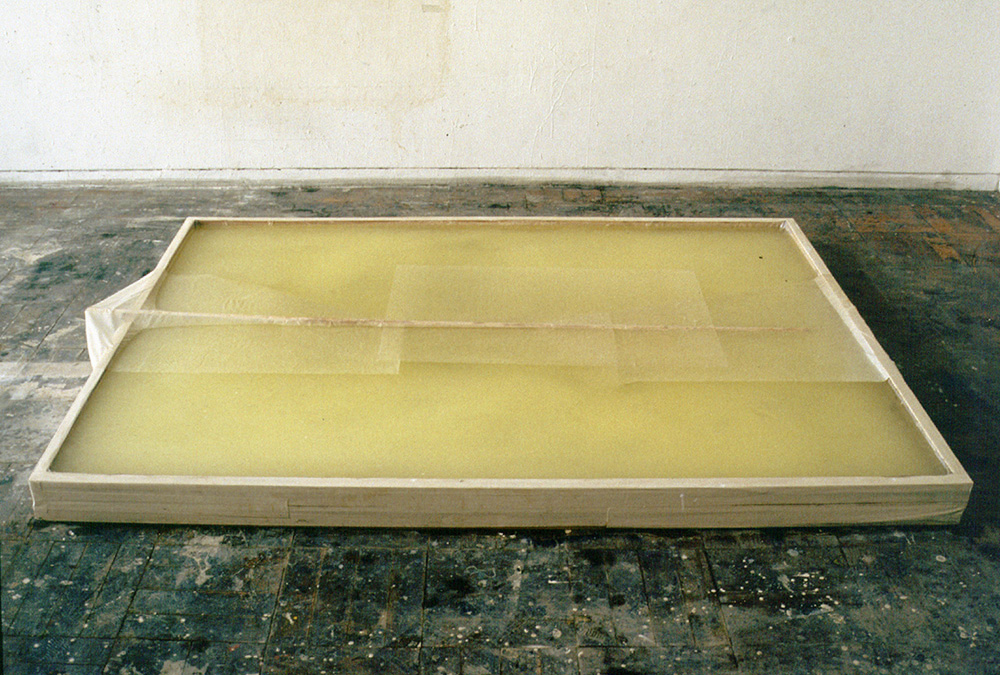
水そのものを扱うシリーズ、第一作。 水には、漆喰及び様々なものが混入し、長期間この状態を保っている。 漆喰の石灰分や上に浮かべられた和紙によって、水そのものが水に見えないこと、質が隠されている状態を試みた。
The first work in a series dealing with water itself. Plaster and various other substances were mixed into the water, and this state was maintained over a long period. Through the lime content of the plaster and the Japanese paper floated on the surface, I attempted to make the water itself not look like water — a state in which its quality is concealed.
水は、すべてを受け入れ、形を持たない、最も深遠な素材である。 時間と共に変化し、絵具はおろか、空中の塵から、派生したバクテリアまで、あらゆるものを包む小宇宙としてあった。 水そのものを立体作品として提示することに集中していく。
卒業制作は、透明ビニールで簡易な浅いプールを作り、表面に和紙とその埃を浮かせた作品で、まるで半透明な板のように見えるもので、確か賞をもらったように思えたが、今ではよく思い出せない。 卒業展は、水であることを理由に都美術館に出品を拒否されてしまう。
当初は、そのように苦々しい記憶と共に、制度というものを強く意識させることになってしまったが、契機となった。 今でも特異点として、作品として再び日の目を見せる可能性を遺している。 水を直接使う表現は、これ以降行っていないが、時と場所が許せば、再び取り入れていきたい重要なモチーフである。
Water accepts everything and holds no form of its own; it is the most profound of materials. It changes with time, and it was a small cosmos enclosing all things — not only paint, but the dust in the air and the bacteria that grew out of it. I came to concentrate on presenting water itself as a three-dimensional work.
For my graduation work I built a simple shallow pool out of clear vinyl and floated washi paper and its dust on the surface, so that it looked like a translucent board. I believe it received a prize, though today I cannot recall it well. The graduation exhibition refused to accept it at the Tokyo Metropolitan Art Museum, on the grounds that it was water.
At first that left a bitter memory and forced me to become sharply aware of institutions — and yet it became a turning point. Even now it remains a singular point, still holding the possibility of coming to light again as a work. I have not made work using water directly since then, but if time and place allow, it is an important motif I would like to take up once more.
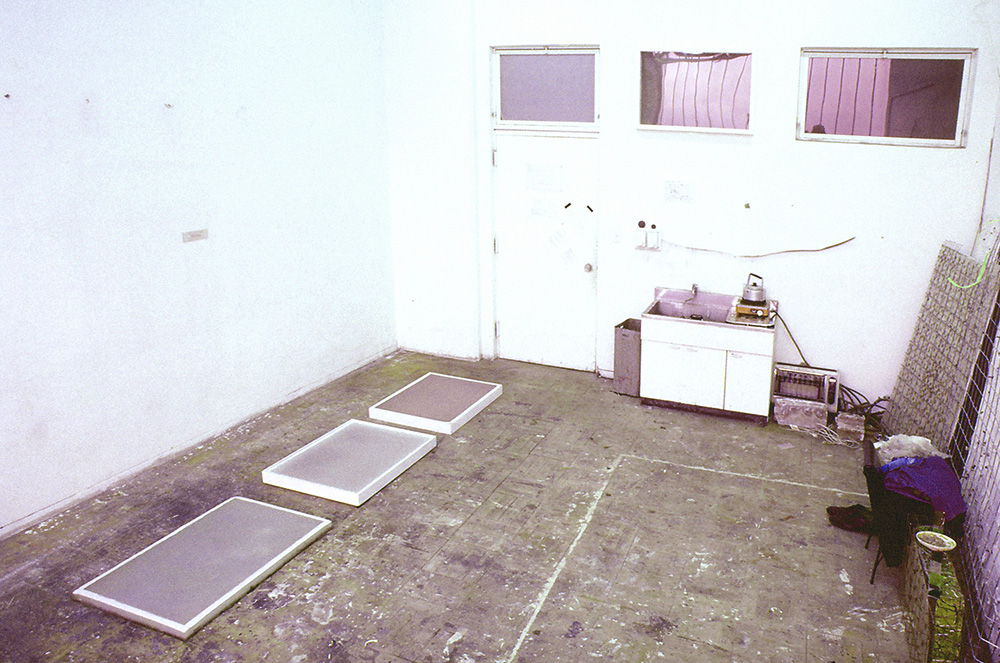
水の代わりに、寒天や様々な素材を用いて、部屋にある既製の窓と、新たに作られたオブジェとの混乱を狙う。
In place of water, agar and various other materials were used, aiming to create confusion between the room's existing window and the newly made object.
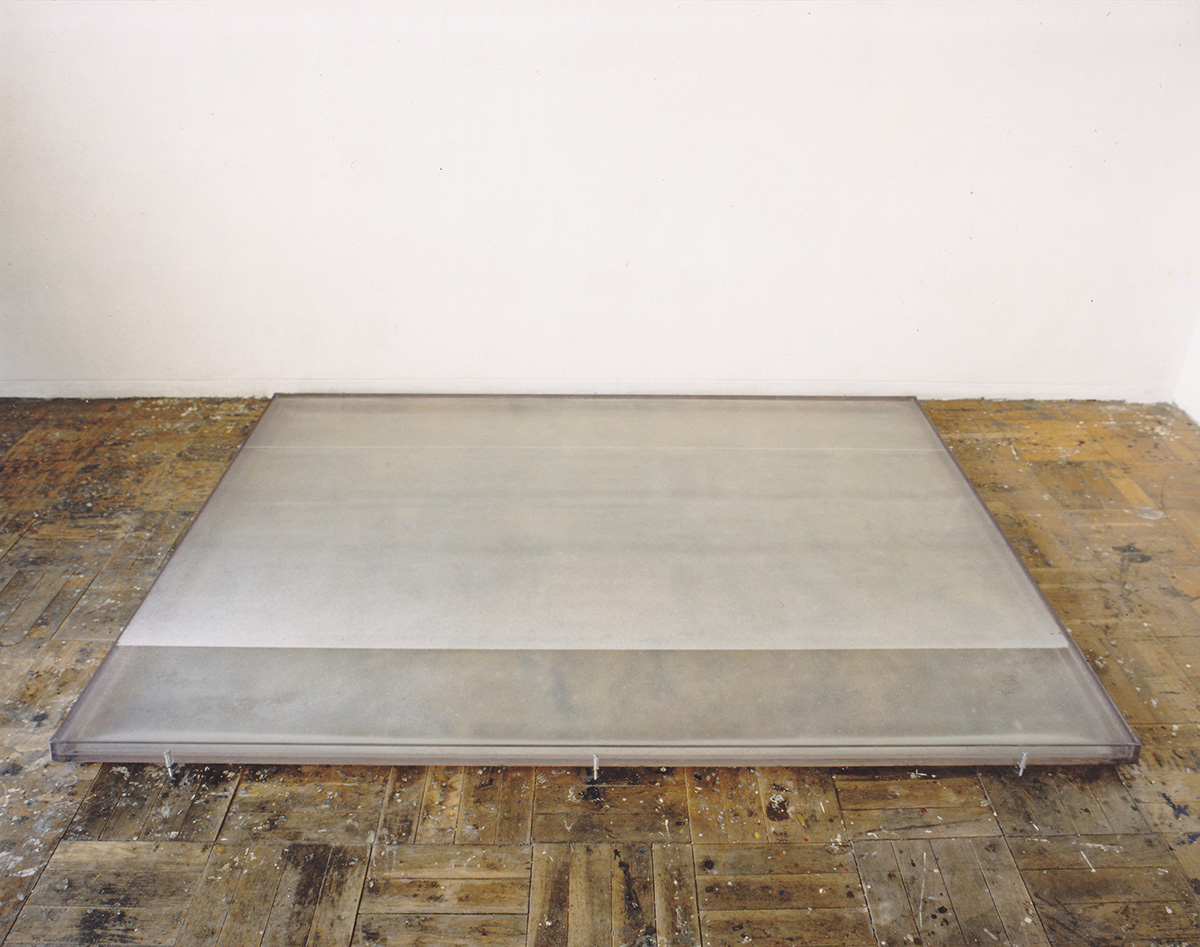
矩形に、表面張力ギリギリまで水を溜め、奥には和紙、手前には和紙の埃を浮かべたもの。 高評価はいただいたが、東京都美術館の卒業展覧会には、水であることを理由に出品を拒否された。
Water was pooled in a rectangular form right up to the limit of its surface tension, with Japanese paper floated at the back and dust from Japanese paper floated in front. It received high praise, but was refused entry to the graduation exhibition at the Tokyo Metropolitan Art Museum on the grounds that it was water.
聖性を求めて — ヨーロッパ、禅In search of the sacred — Europe, and Zen